 Gowtham T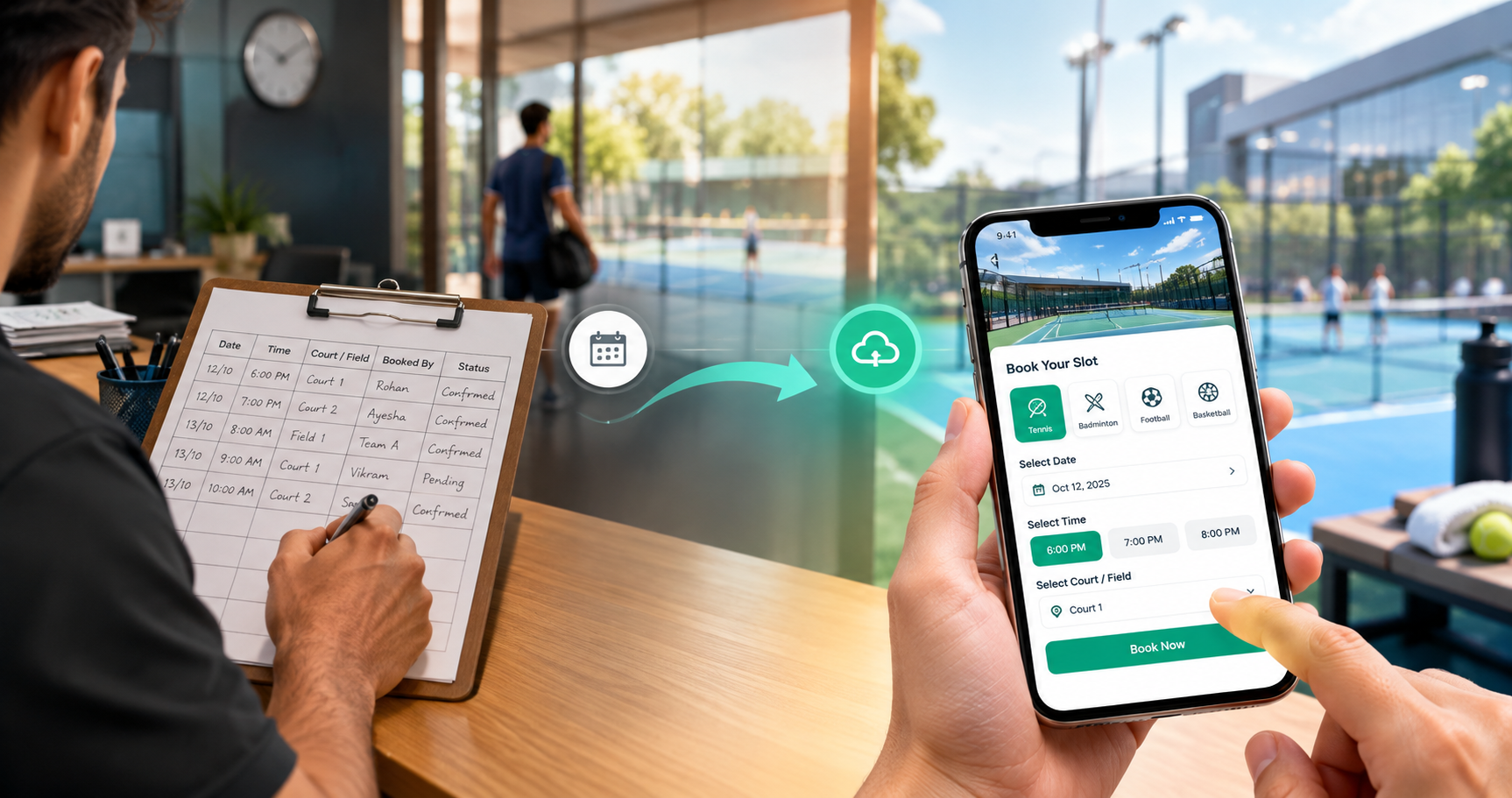
Friday, 6:40 pm, and the desk phone is ringing again.
Court 2, Sunday, 8 o’clock, can we have it? You flip the notebook open.
There’s a name beside the 8, but honestly it could be a 6. Your handwriting from last Wednesday is not helping.
“Let me call you back,” you say, and you mean it. Then you forget, because the next call is already coming in.
That small scramble is why so many owners end up looking at sports booking software. Nobody wakes up wanting new software. They just get tired of Fridays like this one.
The Notebook Isn’t the Villain
Let’s be fair to the notebook. It did its job for years. It was cheap, everyone understood it, and it never needed charging.
The trouble starts when it has to carry more than bookings. Who’s paid. Who’s paid half. Who gets the regulars’ rate. Which court has the leaky corner? What you promised the cricket group on the phone last Tuesday. Some of it lives in the register, some in a WhatsApp group, and the rest in your front desk person’s head.
That last one worries me most. The day they’re ill, a good chunk of your business is ill with them.
Where the Money Slips Out
Nothing breaks loudly with manual booking. It just leaks, a little every week.
Say Saturday 7 pm is your best turf slot. Two teams turn up for it. One leaves annoyed, and they won’t only skip you next time, they’ll mention it in their group chat. Or a team books by phone, pays nothing, and never shows. That hour is gone. Nobody buys last Saturday or Sunday.
Then there are the calls. Is it free? What’s the rate? Can we move to 7? Forty times a week, give or take. Every minute spent on that is a minute you weren’t at the gate saying hello, or noticing the torn net.
Chasing payments is another small misery. Screenshots, half-payments, “I’ll send it tonight.“
The worst losses are the ones you never see. Someone decides at 11 pm to play on Sunday morning, can’t find a way to book, and goes to sleep. You’ll never know that booking existed.
So What Does an Online Booking System for Sports Actually Change?
Same 11 pm. This time the player opens a link, sees that Court 2 is free at 8, pays a small advance and gets a confirmation. Done. You were asleep. In the morning it’s simply there on the calendar, the same one your front desk sees.
That’s really the heart of it. An online booking system for sports gives everyone one live view of what’s free, and the moment a slot is taken it’s gone for everyone else. No double bookings, because there’s nothing left to double. Money comes in up front, so the no-shows thin out.
Reminders go out without anybody having to remember. And when someone cancels, the slot goes back up, and another team that wanted a game on Sunday might grab it by lunch.
Players notice too. Most of us book cabs and movie tickets on a phone without thinking about it, so when a facility offers the same, it feels looked after. Thirty seconds to book, and they come back. Ten minutes of phone calls, and they try the place down the road.
Your front desk team is still the heart of the place, by the way. The phone just stops being the only door in.
Where Sports Facility Management Software Earns Its Keep
Most people buy for the bookings and stay for everything else. Good sports facility management software looks after the regulars’ Tuesday 6 pm badminton so nobody has to rebook it every week. It knows which coach has which batch. It lets you charge more at peak hours and less on a dead Wednesday afternoon, and it lets you block Court 3 for resurfacing without taping a note to the gate.
The most useful part is usually the dullest: a simple report showing which hours never sell. Once you can see that, you can do something about it. A discount, a beginners’ batch, a corporate morning slot. Before that, you’re guessing. And if you have two venues, a paper register can’t tell you which one is doing better. A report can, in a few seconds.
Who Notices It First
Turf owners tend to feel it first. Weekly regulars, same slot every Thursday, and suddenly that’s one tap instead of one phone call each. Academies come next, mostly because they were running batches on one sheet, fees on another and attendance on a third, and somebody always had the wrong version.
Multi-sport clubs are where sports facility booking software really pays off, since a squash court and a football pitch get busy at completely different hours and one calendar finally shows it. School and college grounds get a bonus too. They can set who’s allowed to book what, which ends the “but the coach said we could” arguments.
What to Ask in the Demo
I’d skip the feature tour. Everyone’s tour looks good. What helps more is poking at it yourself. Pull out your phone and try to book a slot while the salesperson watches. If you’re still hunting for the right button after four taps, your players will be too, and they’ll just ring you instead.
Then ask the awkward questions.
- What happens when two people hit “book” on the same slot at the same second?
- How does it handle your badminton courts, where a booking is an hour, and the cricket nets, where it’s by the half hour?
- Can you set your own rates, or do you have to ask them every time?
- And the one people forget: who sits with your front desk team on day one and helps move the old bookings across?
That’s usually where a switch quietly dies, somewhere between “we’ll do it next week” and next month.
A Calm Way to Switch
Changing systems in the middle of a season sounds scary, and it is a bit, so pick a quiet week.
Before go-live, spend an evening writing everything down: courts, slot lengths, rates, the regulars who have a standing booking. It’s boring, but it’s the part that saves you later.
For the first few days, keep the old register open beside the new system. You probably won’t need it, but you’ll sleep better. Send your regulars the booking link on WhatsApp before launch, not after. And let your front desk practice on a few fake bookings first, so nobody is figuring it out live on a Saturday evening with a queue at the counter.
Give it a few weeks. The phone rings less, the calendar fills more evenly, and one Friday around 6:40 you’ll notice you’re just standing there, not scrambling.
If you’re about to book a demo with any sports booking software company, ask them to load your real court names and slots first. Ten minutes in, you’ll know whether it fits.