 Gowtham T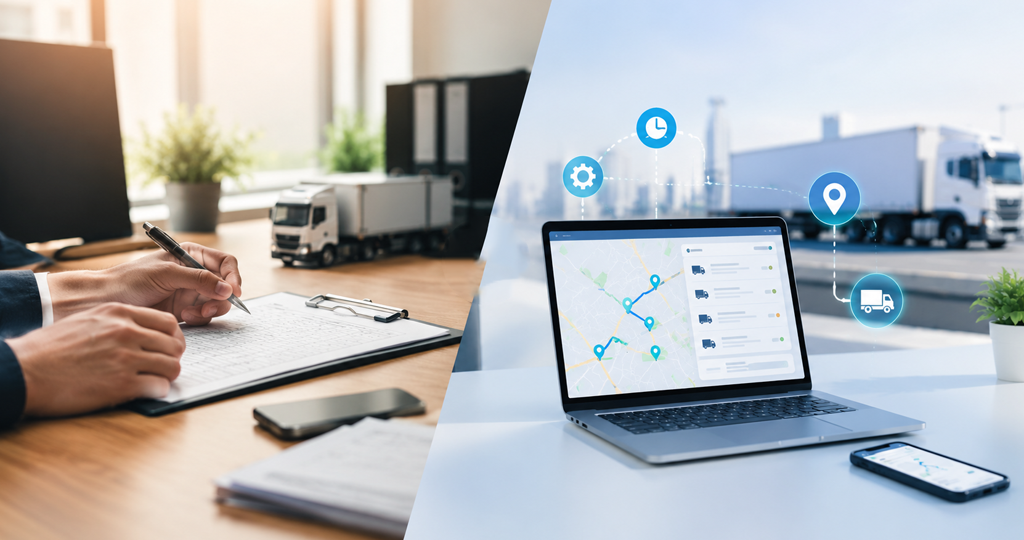
Ask any individual in the distribution field what their mornings look like. You are sure to get the same set of complaints from almost all of them. It usually starts with a stack of orders, a few drivers already running late, and a phone that won’t stop ringing. Somewhere in the middle of this all , they’re supposed to figure out who goes where and in what order, mostly from memory.
That’s manual dispatch. It’s not broken, exactly. It’s just held together by one person’s ability to keep everything straight in their head, and that only works up to a point.
This article isn’t here to tell you automation fixes everything. It doesn’t, and it isn’t right for every business at every stage. But if you’re weighing the two, it helps to actually understand what manual and automated dispatch look like day to day.
So, What Is Manual Dispatch?
Manual dispatch, as the name suggests, means a person, usually a dispatcher, assigns delivery or field jobs by hand. They’re working off a whiteboard, a spreadsheet, or sometimes just a notebook, and they’re calling drivers directly to hand out routes and handle changes.
This works well when the operation is small. If you’ve got four or five drivers and routes that don’t change much week to week, a good dispatcher can run that from memory without much trouble. They know the roads, they know the drivers, and they can make calls on the fly without needing a system to walk them through it.
Where it starts to fall apart is scale. Add more drivers, more stops, more last-minute changes, and suddenly one person is trying to hold too many variables in their head at once. Mistakes creep in, not because the dispatcher isn’t good at their job, but because the job has outgrown what one person can manage manually.
And, Automated Dispatch?
Automated dispatch software takes that same job, assigning drivers to jobs, planning routes, adjusting for delays, and runs it through an algorithm instead of a person’s memory. It looks at things like driver location, traffic, and order priority, then puts together a plan in seconds.
Most businesses that make this switch end up using it alongside broader delivery management software, which handles the whole flow from order intake to driver assignment to customer updates in one place.
Drivers get their stops through an app on their phone instead of a phone call. Customers, meanwhile, get updates through a delivery tracking app, so they can see where their order is without having to call and ask.
The real shift here isn’t speed for its own sake. It’s that the system is working off live information instead of whatever the dispatcher happened to know an hour ago.
Manual Dispatch vs. Automated Dispatch: Key Differences
The gap between the two shows up most in how each one handles change.
A manual dispatcher plans based on what they know at the moment they’re planning. If traffic backs up twenty minutes later, nobody adjusts the plan unless someone notices and makes a call. An automated system catches that shift and reroutes around it without waiting for a human to spot the problem.
Scale is another sticking point. Ten more drivers means ten more things for a manual dispatcher to track. An automated system absorbs that growth without needing a bigger team to manage it.
Then there’s visibility. With manual dispatch, most people, including the business owner, don’t actually know where a delivery stands until someone picks up the phone and checks. With a delivery tracking app in the mix, that information is just there, for the customer and for the team.
None of this makes manual dispatch pointless. It just means the two are built for different situations, and the right one depends on how complicated your operation actually is right now.
Challenges of Manual Dispatch
Most businesses don’t notice manual dispatch is a problem until they’re already dealing with the consequences.
Mistakes happen more than people admit. Even a sharp, experienced dispatcher will eventually double-book a driver or send someone the wrong way when they’re juggling forty things at once. It’s not a skill issue. It’s a limit on how much one brain can hold.
Changes are slow to reach the road. If an order gets cancelled or a new one comes in mid-shift, someone has to notice, then call the right driver, then hope the message lands before it’s too late to matter.
The costs are quiet but real. Inefficient routes burn extra fuel and extra hours, and none of it looks like a big line item on its own. It just adds up over a year in a way that’s hard to trace back to any single decision.
Customers end up in the dark. Without live tracking, the only way they find out where their delivery is happens to be calling your office and asking someone to check.
And growth gets harder, not easier. What worked fine for eight drivers usually starts breaking down around thirty, right around the point most businesses are trying to expand.
Benefits of Automated Dispatch
The point of automating dispatch isn’t cutting people out of the process. It’s giving the team fewer manual tasks to babysit so they can spend time on the calls that actually need a person.
Jobs get assigned faster and more accurately. Automated dispatch software matches drivers to jobs based on real factors, location, load, priority, instead of a dispatcher eyeballing a spreadsheet under pressure.
Plans adjust as things change. Traffic, cancellations, new orders coming in mid-route, the system factors all of it in without someone having to catch it manually.
Routes cost less to run. Better routing means less fuel burned and fewer wasted hours, and that difference shows up in your margins over time, even if it’s not obvious week to week.
Customers stop calling to ask where their order is. A working delivery tracking app answers that question before they even think to pick up the phone.
Growth doesn’t require hiring a bigger dispatch team every time you add drivers or expand into a new area. The system just handles the added load.
And you actually get data worth looking at. Decent delivery management software shows you which routes are inefficient, which drivers are consistently behind, and where you’re losing money, instead of leaving that buried in nobody’s memory.
When Might Manual Dispatch Still Make Sense?
Automating everything isn’t always the smart move.
If your operation is genuinely small, a few drivers, routes that barely change, the cost and effort of switching systems might not be worth it yet. A dispatcher who already knows three drivers by name doesn’t need software telling them what they’ve had memorized for years.
Some businesses also run on relationships more than logistics. If your delivery pattern depends heavily on personal judgment or long-standing customer arrangements, a rigid optimization engine might actually get in the way rather than help.
Basically, automation earns its cost once your operation crosses a certain level of complexity. Below that line, it can end up being more tool than you actually need.
Signs Your Business Is Ready to Switch to Automated Dispatch
A few patterns tend to show up right before businesses decide to make the change.
Your dispatch team is spending most of their day putting out fires instead of planning ahead. Customers are calling more often to ask where their delivery is. You’re adding routes or drivers faster than your current process can keep up with. Costs are creeping up and nobody can quite explain why.
Mistakes like missed windows or double-booked drivers are becoming a regular occurrence rather than a rare one. And there’s no real way to measure how your team is performing across routes or drivers.
If a couple of these sound familiar, it’s probably worth looking into automated dispatch software instead of continuing to patch the current setup.